SlicedBrand Articles
Why data is the secret to lasting PR, and where to find it
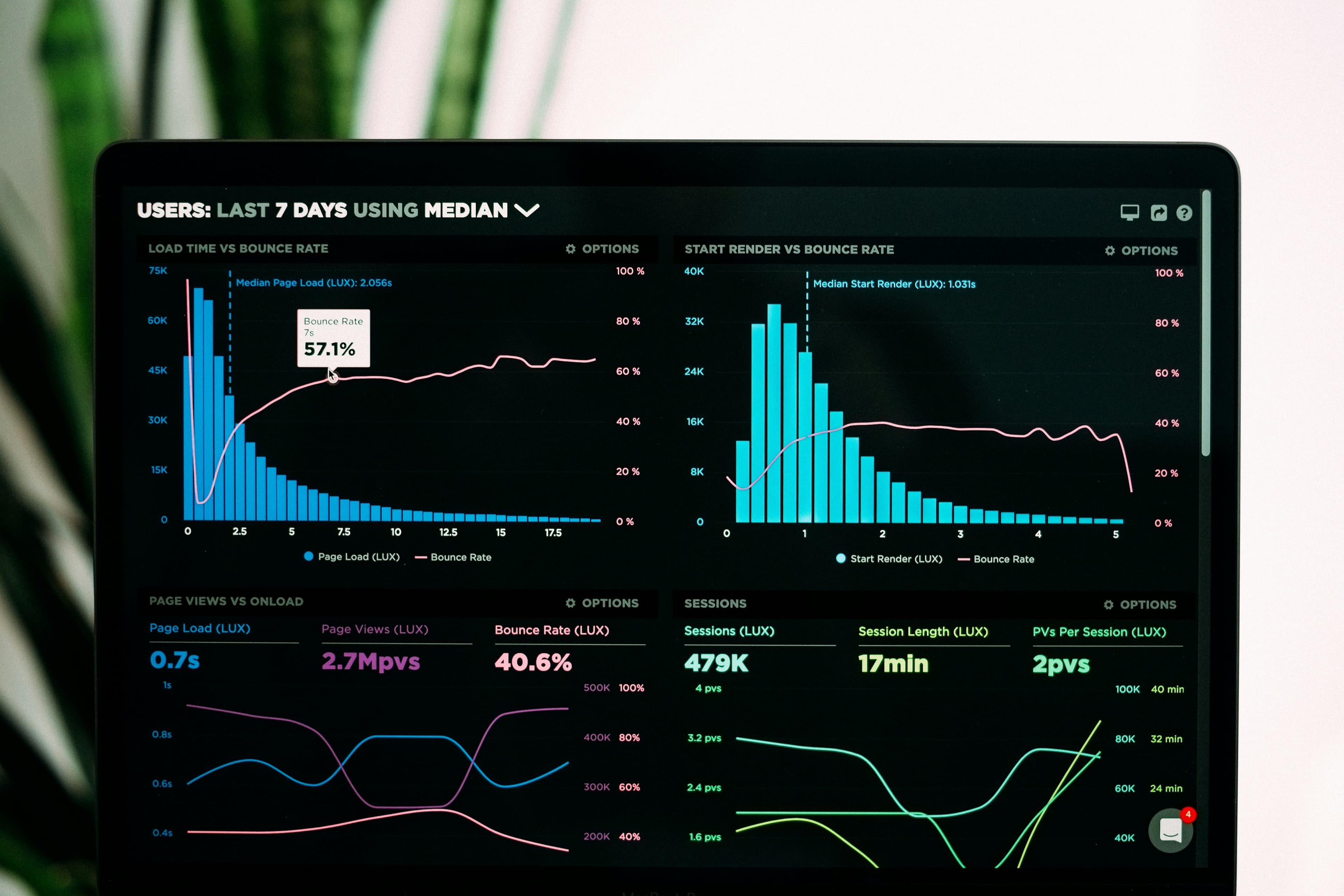
Data fuels great PR long after the maiden launch

Luke Holohan

Luke is a former journalist who has covered breaking news, culture, and tech, and knows firsthand which pitches justify the email. For many years, he has successfully worked with C-suite executives in private equity, entertainment streaming, manufacturing, music tech, software development, security, and quantum computing. His current favorite author is Rob Doyle, though he saves the nihilism for weekends.
PR gets you known. GEO gets you cited.
The death knell for PR has been rung so many times now that most people in the profession have gone deaf to it. The soundoff is now more of a dogwhistle, one that summons people to tell you that the old rules no longer apply and that you now need entirely new paradigms for acronyms that threaten to kill my word count: Answer Engine Optimization (AEO), Artificial Intelligence Optimization (AIO), and Generative Engine Optimization (GEO).
But, inconveniently for those people, many of the old rules underpin these new AI discoverability objectives. The honest truth is that hiring a top-notch PR agency is still a major part of your brand turning up in AI search.
So what should you know about PR and GEO? How can the best PR agencies impact GEO?
Good PR is already GEO
A reputable PR agency with success stories across a wide range of sectors, including AI, consumer, venture capital, health tech, sustainability, and enterprise, is one of your best shots at achieving your GEO and AI citation goals.
Public relations professionals are key to getting your company and brand into top-tier publications that models like Claude, ChatGPT, Gemini, and Perplexity have made a staple of their training diet and learned to trust. The evidence is stacking up.
For example, Muck Rack analyzed more than 25 million AI-cited links and found earned media, journalism, and third-party coverage account for roughly 84% of all AI citations. Meanwhile, Ahrefs’ analysis of 75,000 brands discovered that branded web mentions appeared to matter more for AI Overview visibility than backlinks, domain rating, and paid ads.
According to Ahrefs’ own Content Director Ryan Law, unlinked brand mentions and plain text about a brand on someone else's site barely move classic SEO. But they're actually one of the strongest GEO signals there is, because LLMs are trained on the open web, so that includes words, facts, and context surrounding a brand's name.
For example, when a customer asks about the best K-beauty serum on the market, LLMs pull that from how often and consistently a brand like COSRX or Yepoda shows up across trusted independent coverage and reviews online.
Nobody can guarantee you an LLM citation
GEO is not a new magic trick. And any PR agency telling you they can pull every lever an LLM pulls and guarantee you a citation by a specific date is not being truthful, and at best guessing. Anthropic’s Evan Hubinger can’t even promise us that AI won’t kill all of humanity within a decade. There is no equivalent of Search Console for AI answers, which means there is no exact GEO playbook that tells you why ChatGPT or Claude cited one brand and not another. It is also why companies still need the best practices of PR and SEO to get their brands to the AI Promised Land, because they still work.
Even Google admits that there are no special optimizations that guarantee inclusion in its AI overviews, only the standard technical requirements that make a page eligible to be considered. “The best practices for SEO remain relevant for AI features in Google Search,” Google’s latest developer documentation states.
OpenAI and Anthropic allow publishers to opt in or out of citation independently of model training. However, neither company publishes optimization playbooks, leaving the exact, scientific certainty for what earns a citation as something of a black box.
Perplexity is probably the closest any of these companies comes to signaling what it values, via its Publishers Program that pays websites it cites and shares some performance data. Even so, it doesn’t reveal the full ranking logic, and nobody can guarantee a new way in. What you can do is hire SEO and PR professionals who have been doing this work for years, and add a few GEO-specific tweaks that many argue have always been the purview of the SEO specialist.
PR-GEO best practices:
SEO-GEO best practices:
Before hiring a GEO PR agency, check its pre-GEO work
We should remember that the term generative engine optimization only entered wide circulation following a 2023 Princeton-backed research paper
Anybody can nod along when you ask about GEO. But not every PR agency can show you proof of what they've done before that will naturally help with GEO.
Start with the coverage. As a PR client, it's important to see proof that your PR partner can land placements in established trade press, recognized industry publications, and outlets an AI search engine is more likely to draw from when forming an answer.
Then consider how you will measure success. This could mean running the same prompts against ChatGPT, Claude, Gemini, and Perplexity and logging which brands get named. It also means analyzing which competitors show up and where their citations come from. This can act as a GEO map of exactly which outlets and mentions are working.
Like any PR campaign, GEO builds gradually, and a single placement is unlikely to do the work on its own. The honest truth is that it takes months of repeated coverage for AI assistants to start talking about your brand and startup.
Data fuels great PR long after the maiden launch
-nL0psK917e9fxJHXKYhk8YrJSszvOc.jpg&w=3840&q=75)
GEO isn’t only about being cited, but about being understood

Journalists don't cover missions. They cover proof.